Kotak Explains Sanju Samson Call After Early Wickets
Sanju Samson breaks offspin trap
View: 13662
Published - 12 Mar 2026, 12:04 IST
Updated - 12 Mar 2026, 12:35 IST
34 Min Read

1.2K
0
In an exclusive interview with Cricbuzz, Sitanshu Kotak, the men’s batting coach for India, discusses the 2026 T20 World Cup journey, including why he trusted Abhishek Sharma, why he brought back Sanju Samson, the high risk, high return strategy, and much more.
In retrospect, what thoughts do you have about this World Cup campaign? Was the strategy to hit a six on the first ball?
No, to be honest, the only thing we knew—and the only thing I thought at the time—was that our strategy needed to be constant because we had eight talented hitters who could all score at any strike rate. We would always start at greater than 10 runs per over if we lost no more than two wickets during the PowerPlay. What would happen if we lost three or four wickets in three or four overs was our only serious concern.
We therefore decided to go hard from the first ball. We wouldn’t slow down or alter our strategy even if we took a few wickets. Instead, we would play shots with a reduced risk percentage for the next six to eight balls. The plan was to continue attacking, but if two wickets were taken quickly after one another, we would make sure that the next six to eight balls were spent batting wisely and re-establishing a partnership.
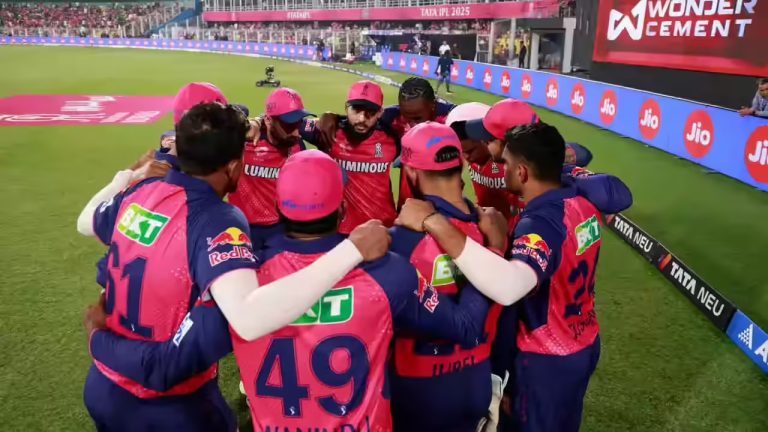
We also concentrated on partnerships: 40, 45, or even 30 runs. This was something I personally concentrated on as a batting coach. We scored more than 250 in the last two games. We had five or six partnerships in the semifinal, including 8-ball 24 and 22-ball 45. In Tests and one-day cricket, we frequently discuss partnerships. However, in T20s, I believe that a solid batting unit can only lose if there is a major collapse.
We lost by 100 (76) runs, just like in the match against South Africa. We were reminded once more that we cannot lose three or four wickets in a row, so in a way, that loss was significant for us. You just cannot win a T20 match if that occurs. Playing fearlessly and with a very positive intent is therefore equally crucial. However, we also need to keep in mind that no matter what, we cannot lose three or four wickets at once. That strategy was quite effective. Overall, it was quite fulfilling because the boys batted with such selflessness.
Gautam Gambhir, the head coach, has promoted a high-risk, high-reward batting strategy. How do you, as a batting coach, apply the policy?
Everyone had a part, basically, from No. 8 to the openers. They were aware of what was expected of them. We were aware of the matchups, including when we could send Shivam Dube, when we could elevate Hardik (Pandya), and when Tilak (Varma) could enter. Thus, all that preparation was present. Additionally, we were aware that we needed to play hard—the high-risk, high-reward approach in T20s.
In this style, Gautam and Surya (Suryakumar Yadav) are among the best leaders available. They work well in any format, to be honest. However, when it came to the World Cup, they both understood exactly what we needed. I firmly believed that we would succeed. We might get stuck if we lose three or four wickets in a row, I warned them.
Therefore, if we lost two wickets, we had to make sure that we somewhat stabilised the situation. Surya would attempt to establish a partnership and play the first eight to ten balls cautiously without even speaking. He understood his role. In certain instances, he occasionally even gave up his own position to do so.
We talked about this even before the semifinal since we didn’t know what a safe total was given the way the games were going. Even with a score of 254, you could still be in a conflict. The idea was the same for all of us: we would play with good intentions. A player was free to knock a six from the first ball if he felt confident enough to do so. Even if he managed to escape, it wasn’t illegal. Naturally, everyone was prepared to settle an innings for eight or ten balls if the team needed someone to do so.
What did you find particularly noteworthy from a batting standpoint in the previous three elimination games?
I used to say, “We’ll win four again after losing one.” Thus, we’ll win the World Cup. I was constantly thinking about that. It’s clear that those final four games were knockouts. Thus, we considered the final four games to be pre-quarterfinal, quarterfinal, semifinal, and championship.
The vibe in the dugout was really upbeat and self-assured. The players and all others engaged, including the support personnel, were genuinely quite positive. It was excellent. Naturally, nerves are a part of everyone. However, confidence outnumbered scepticism by a wide margin. I am able to tell you that much.
From my perspective, I always thought that the eight hitters we had could change the course of the game at any moment. I continued to believe that someone will step in and take the necessary action even if we lost four wickets.
You were practically a red-ball classicist as a player, and now you are the world’s top T20 coach. What did you need to adjust or modify?
To be honest, one thing I discovered when I began coaching—and I’ve heard this from many seasoned coaches—is that you should forget that you were a cricket player once you start instructing. Otherwise, I will start asking players to play shots that I found easy if I start coaching based on my personal cricketing experiences. The beauty of coaching lies in that. A player is not being coached by me to become like me. I am working with a batsman to help him reach his full potential.
After completing these Level 1, Level 2, and Level 3 courses—I’ve completed a good many of them—you realise that what you used to perform as a player is no longer particularly significant. Every gamer is unique. Abhishek (Sharma), for instance, is entirely different from Ishan Kishan. Sanju is entirely different from Tilak when you look at him. Surya is not the same as Tilak. Each of them plays a different shot. Hardik differs from Shivam as well. Additionally, Rinku stands out from the others when you see him.
Thus, there is no one style of coaching. When I’m coaching a player, I consider his strengths. After that, I determine which areas would be problematic and how I can help him get better, or technically, how we can assist him in addressing those areas. As a result, it becomes very personal. For me, batting coaching is a highly personal process.
How do you perfect a ramp shot that you’ve never used before?
The technical aspect of it is that. I’ve finished my Level 1 and Level 2 coaching courses with the BCCI. Additionally, I completed Level 2 and Level 3 Cricket Australia; I travelled to Australia for them. I have also finished a number of additional courses and ECB Level 2. You learn a lot about biomechanics and batting technique in those classes.
Next is the practical aspect, which is undoubtedly about being on the ground, collaborating with teams, gaining experience, and exchanging concepts with coaches and players. You continue to study while conversing with others. I have been quite fortunate. Rahul Dravid was present when I entered the NCA. He taught me many things. Working with Gautam has also been a huge learning experience over the past year and a half. You get fresh ideas from his mindset, how he views the game, and how he believes Indian batsmen should approach matches.
I consider myself fortunate to have had the opportunity to learn from these outstanding batters. Naturally, working with athletes—from young cricket players to experienced Indian stars—also turns that into a strength. I also attempt to learn from them. When they discuss topics that I might not have considered, I am willing to accept it. I’m interested in what they believe, do, and would have done in a certain circumstance. Technically, all of that has taught me a lot. I have continued to learn a lot about the technical aspects of the game through these classes and working with many players over the years.
We are all learning from that, even me. That’s how I’ve learned a lot. Therefore, I don’t really consider if it’s T20 or something else. Since the DY Patil T20 event, I have actually played a good deal of T20 cricket over the past six or seven years. And in England, where I played for nearly 20 years, T20 cricket has always been part of the league structure. There was a T20 league there from the first year I played. Additionally, I don’t think I have any problems with photo selection or the technical aspects of it because I am aware of how these shots are performed. I think I could sum that up in one word.
The initial four victories were thorough, although not quite convincing. India then scored nearly 1000 runs in the final four games. Could you explain the abrupt change?
For us, every game was a knockout after the South Africa encounter. But what I felt was that in all the bilateral series – since I have been part of the squad, if you see the Asia Cup and even before that the England T20 series – as a batting unit we were establishing momentum right from the start. We were hitting incredibly good.
Sanju was a little out of form during the event, and Abhishek became ill and also saw a slight decline in performance. I therefore thought that the momentum we had built during the Asia Cup and the bilaterals wasn’t really materialising. I also stated in one of my news appearances that I’m not concerned, but I’m just hope that momentum returns as quickly as possible.
For that, it was crucial to avoid losing more than two wickets during the powerplay; if we managed to end the powerplay with just one wicket lost, we were outstanding. You can see from the stats that we had to hold back a bit anytime we lost more than two wickets in a short period of time.
Thus, we prepared for that. For us, the USA game served as a kind of warning that these kinds of circumstances can occur. We scored over expectations in that match because to Surya’s excellent temperament. The fact that we lost to South Africa once more served as a reminder that all subsequent games were knockout. We couldn’t afford to play a similar game again.
The guys deserve a great deal of praise for how they handled everything and the pressure. Since Gautam and Surya were under a lot of strain and had a lot of duties, it goes without saying that their leadership also deserves a lot of praise. My input is little. I simply make an effort to do my best. Thus, I think the coach and captain deserve a lot of praise.
How did you maintain the motivation of both Abhishek Sharma and Sanju Samson at first?
The belief was always present. Prior to COVID-19, I recall that Sanju had been sidelined during the 2019 India A vs. South Africa series, but Rahul bhai chose him for the final two one-day matches against South Africa. The game in Thiruvananthapuram is still fresh in my mind. He was out on the first or second ball in the fourth game, which was his first game in the series. He was supposed to bat at No. 6 or No. 7 in the previous game, but the rain disrupted it. With only 21 overs remaining in the contest, I thought Sanju might not have a chance.
India A was more concerned with development at the time. Winning wasn’t the only goal. India A’s job, according to Rahul bhai and Laxman, is to produce the best pool for the senior Indian squad. Therefore, the emphasis was on providing players with opportunities rather than on victories and losses. When I was the head coach of the India A team, they consistently advised me to take that route. “Don’t worry if we win or lose,” they would say. It won’t be your fault. Since these players are all crucial to Indian cricket, our goal is to provide them with equal opportunity.
I couldn’t just make snap judgements, so when that match was cut to 21 overs, I called Rahul bhai. I informed him that Sanju was the only player who had joined the team after three games but had yet to be given a chance. I requested to put him in at number three. “Kotzi, you don’t even need to ask,” Rahul bhai told me. You have a good motive for doing it. Feel free.
I thought Sanju wouldn’t have much of a chance in the last game of the series if he batted at number seven. And I can still recall what took place. He scored around 90 runs in roughly 30 to 35 balls. With bowlers like Anrich Nortje and Junior Dala and skipper (Temba) Bavuma, South Africa possessed a legitimate international attack. He smashed sixes frequently that day, even against Nortje, which was a lot like how he performed in the World Cup knockout stages.
From that day I always knew he was extraordinary. Sanju understood why I gave him a promotion. Each of the other hitters, including Ruturaj Gaikwad and Ishan Kishan, had already had two strong innings. Many of them were already on stage.
Later, we were 1-1 in the ODI series when I was with the Indian squad in a South Africa series while Rahul bhai and the others were getting ready for the Test series. When KL Rahul was captain, I moved Sanju to No. 3 after Ruturaj broke his finger in the second game.
In that game, he scored a hundred. I used to say to Sanju, “You know how much I trust you,” even when he wasn’t playing. Injuries, form problems, and combination changes can all occur on a daily basis. “Kotzi bhai, don’t worry. I am always ready. Whenever the team needs me, I will contribute,” he would say with a smile. “You should be prepared because you might be the one who wins us the World Cup.”
The other challenge was Abhishek. He had three or four difficult games at the beginning of the tournament, but he is a wonderful kid who is always smiling. You never see him bitter or frustrated. Of course he was worried, but he remained confident. He kept saying, “Nahi, nahi, main karunga.” At one point, I thought he was trying to hit the ball too hard, which is not really his strength. Players like Shivam and Hardik can muscle the ball out of his natural flow and timing.
These were small inputs from people who have played a lot of cricket. Surya also played a big role in keeping players mentally relaxed and confident. When you win a World Cup, there are contributions from many people. But we always kept the faith that the entire batting group would contribute. I have always believed that to win a tournament like a World Cup, it cannot be only two or three players performing. Eight players have to contribute at different moments.
When we played New Zealand, for instance, their openers were doing well, but I always felt that if two openers got out after a good total, the rest of their batting might struggle. With the Indian team, you never get that feeling; if Abhishek gets out, Ishan Kishan will do it; if he gets out, Sanju will do it; if Sanju gets out, Tilak will do it; if Surya, Shivam, Hardik, or Rinku will do it. If Abhishek had scored in all those games, I would be concerned.
The most crucial aspect was that everyone was playing for the team, not for themselves. Surya had his moments, Tilak had his moments, Sanju had his moments in the last three games, Abhishek had his moments in the Zimbabwe game and the final, and Ishan Kishan consistently struck at over 200 and set the stage for players like Shivam, Hardik, or Tilak to start attacking. In my opinion as a batting coach, that is an excellent batting line-up to have.
Then the opposing teams abruptly switched to an off-spin upfront plan. What specifically transpired there, and how did you resolve that issue?
We realised that we had three left-handers at the top against off-spin because Tilak was batting at No. 3, but there’s no point in being stubborn after a certain point. We lost a wicket in the first over in four of our games, and that’s when we started to think differently. Sometimes you can say it’s God’s plan. In a way, it worked that way for us because it made us believe that we needed to use Sanju.
Rinku was not getting many opportunities at No. 8, and we also needed to break that left-left-left combination at the beginning, which is how Sanju returned to the picture. We decided to use two wicketkeepers, but it didn’t matter because Ishan is an equally good fielder and Sanju could keep wickets. Ishan also happily said that it was okay and that he would field, so sometimes these things also work out.
We had a lot of flexibility in the middle order from Nos. 4, 5, and 6. Surya even sent Shivam ahead of him in the semi-final, I believe, and Hardik ahead of him in the final. That worked really well. And Sanju, with his temperament and leadership qualities, the way he batted in the last three games was just unreal. We always knew what he was capable of, which is why people supported him. After Sanju opened, the combination became left-right.
A lot of credit must also go to the selectors, the BCCI, Gautam and Surya for keeping faith in him. At one stage there was criticism about why he was still in the team. But people who have played the game and who have seen him closely know what he is capable of. Of course, you can never guarantee that a player will perform exactly when you want him to.
What was the atmosphere in the dressing rooms at the World Cup?
As a team, we managed to keep the atmosphere upbeat even in the face of adversity. Sometimes, when you lose a game, like the South Africa match, people can become a little resentful, but in that camp, everyone was still having fun and being joyful. Surya deserves a lot of praise for keeping the atmosphere so friendly and upbeat. Gautam was also very brilliant; he never said anything that would put Abhishek or Sanju under pressure.
Then there was Tilak. At first, his strike rate seemed a little low for a few games, but in the Colombo match, we really wanted partnerships. The idea was to somehow make sure we crossed 160 or 170; if Hardik had been out early in that game, we might have even reached 190, but we still managed a competitive score. At one point, it might have appeared that Tilak was a little slow, but in reality, it was only a matter of one or two boundaries. Later, when we discussed it, he also felt that he could have been a little more aggressive.
“If you feel that way, don’t hold back next time,” we told him. It doesn’t matter if you escape. These were some of the fundamental guidelines we adhered to: “You cannot play T20 cricket with the fear of getting out. Of course, being a little cautious is understandable if the team has lost two or three wickets, but you can’t worry too much about getting out if wickets are in hand.”
“You actually batted really well in these games, so don’t take any pressure. In the next game just judge the situation and play according to what the team requires,” I told Tilak, who came to me and asked me directly, “Kotzi Bhai do you think I played a little slowly? Should I have been more aggressive?” He simply replied, “Sir, leave it to me.” “I will do that.”
How has working with Ishan been since he returned?
Ishan has been outstanding. He was a member of the Indian team during my first series as head coach against Sri Lanka, along with Shubman, Ruturaj, and Sanju. Ishan is an incredibly gifted young man. Prior to that, I worked with him while I was head coach of the Gujarat Lions in the 2016 and 2017 Indian Premier League.
I also witnessed him play some outstanding innings against Saurashtra when I was coaching Saurashtra, so I’ve always known how capable he is. He was already a ready player when he returned to the team, which is why I think the BCCI deserves a lot of credit for the way our domestic structure is set up. There are a lot of matches, players receive financial support, and there’s the IPL. The amount of work the BCCI does behind the scenes for all of this is also deserving.
People frequently claim that India could have two or three teams in a World Cup or other major tournament and still do well because of this structure, which ensures that players are ready whenever they get an opportunity.
A score of 160 is probably not a winning total at this point and on these wickets. We planned from the powerplay to the final overs that if we executed our plan correctly, the score should reach 220-plus, so we never really planned for 160 or 170. If you want to become champions, you have to think in terms of 200-plus anyway. Gautam says he will not settle for totals of 150 or 160.
Everyone talks about batting without fear, but being fearless involves much more.
The idea is to forget the last game if it didn’t go well and remember the good innings instead of the ones where you struggled. Sometimes you just get a good ball, sometimes things don’t work—that’s what happens in T20 cricket. From my end, I always tried to keep the players in the right frame of mind, regardless of how they had performed in the previous games, like Abhishek or Sanju.
In order to help them feel well-prepared, I always tried to keep them in a mindset where they felt confident about their abilities. Beyond that, we tried to provide them with everything they requested, such as good practice sessions, specific bowlers in the nets, new balls, used balls, and different types of deliveries. Once that confidence is there, you can gradually introduce certain ideas, such as a small technical point in Sanju’s case or something slightly more technical in Abhishek’s.
The player already knows where he might need to improve, so our job is to help him realise that he can work on it without making him feel like it’s a major flaw. Finding the right balance between putting too much pressure on the player and getting things across is always difficult, but in my experience, it worked well with Sanju.
And with someone like Ishan, who I’ve known for almost ten years, since he was sixteen or seventeen, he was mentally strong and very optimistic when he returned, and he had a lot of support from Gautam, Surya, and everyone else. He is also a very strong character, and in the end, everything went well at the right time.
This high-risk, high-reward approach – do you believe it will succeed in conditions like Australia, New Zealand, South Africa and England?
To be honest, the first thing I bring up in team meetings when we have a proper discussion is to evaluate the conditions and determine what the par score should be. For instance, if we are playing in Ahmedabad, we know that the par score could be around 200 or even 220. Similarly, when we played in Australia, where we won the T20 series, we knew from the data that the average score at certain venues was around 160 or 170. Therefore, if the average score is between 160 and 170. We use all of that information to prepare our plans.
We spend a lot of time on this because it’s not just about different countries; even within India, conditions vary from venue to venue. Our analysts also put in a lot of work to prepare all the data prior to the match, and then we go out and look at the wicket ourselves based on that information. Sometimes the data may indicate that the par score is around 160, but you may feel that it looks more like a 190 or 200 wicket when you see the surface.
This has also occurred in Australia. In one of the matches there, the data indicated a par score of about 160 or 165. However, we felt that the score needed could be closer to 190 based on the pitch’s dryness, grass, and firmness, so we made those minor adjustments.
Overall, though, I think that the high-risk, high-reward strategy in Twenty20 cricket will always be successful. The key is to accurately assess the conditions, which is why it is crucial for the top two or three batsmen to take the pitch first, evaluate the pitch’s performance, and promptly relay the information back to the dressing room so that everyone can make the necessary adjustments.
Now that everyone will adopt the Indian blueprint, what are the hurdles facing the Indian team?
We constantly strive to add something fresh, depending on the circumstance. At different times, with different players, we keep introducing new ideas because, in my opinion, while styles can be imitated, it is preferable to develop your own style. I have a way of doing things that would probably be hard for someone else to duplicate; it comes from your personality, your way of thinking, and the way you interact with players.
For me, it’s also about maintaining a low profile when working with athletes; often, even when you know everything and feel compelled to speak, coaching involves making the decision to remain silent.
How can you modify your coaching to fit into three distinct formats?
Red Ball is obviously about footwork, and even in the 50-over format, with the exception of the final five overs, there is a lot of footwork involved. One of the primary technical differences in T20 cricket is that, in theory, it is more about building a solid base early on so that you can generate maximum power.
For me, T20 cricket is mostly about aligning yourself well and building a strong base to hit the ball. In one-day cricket, a lot of it is about rotating the strike and using your footwork. In red-ball cricket, footwork is also very important—front foot, back foot, planning your innings, leaving the ball and choosing when to play.
The main technical difference is that you may not have a stable base during those 20 overs if you are moving around too much, using too much footwork, or getting too airborne while playing shots. Without that strong base, it becomes difficult to generate the power you actually want, so we prepare accordingly.
What did the 2024 and 2926 sides differ from, in your opinion?
With players like Rohit Sharma, Virat Kohli, and Ravindra Jadeja, the previous team had a lot of experience. This current team, on the other hand, has less experience, but having someone like Jasprit Bumrah helps, and of course Hardik is there as well.
The biggest difference, in my opinion, was probably how the innings were organised. Rohit was more akin to what we are currently attempting to do, which is to be fearless from ball one, whereas Virat is someone who forms partnerships, stays there with the other players, and tries to take the innings deep, so that was a different kind of approach.
The 2024 team and the 2026 team, in my opinion, take somewhat different approaches because of individuals like Hardik and Abhishek, who each bring a unique style to the game and a distinct taste to the team.
How do you think T20 batting will develop going forward?
Even during the semifinal, we were making jokes about how many runs you would truly need if you bat first. I believe that scoring patterns are changing very quickly due to the way the game is progressing and the quantity of T20 cricket we are currently playing.
It might become even more difficult by 2028 because the tournament will take place in Australia and New Zealand, which will have different conditions—different soil, different pitches, and different wicket preparation—and if those conditions are batting-friendly, I wouldn’t be shocked if teams began to consider that even 250 might be a competitive first-innings total.
I was around ten years old when India won the 1983 World Cup, and even 200 runs in a 60-over match was regarded as a huge total. Today, 200 sometimes doesn’t look enough even in a 20-over game, demonstrating how much the game has changed. I’m not sure where it will go in the future, but one thing is for sure: it will continue to challenge players, coaches, and everyone involved in the game.

Get CricketMood News First
Add Us as Your Trusted Source
Download Our App
For a better experience: Download the CricketMood app from the ios and Google Play Store
Get every cricket updates! Follow Us:


1.2K Likes